USRP B210 COGNITIVE RADIO
A USRP (Universal Software Radio Peripheral) is a flexible hardware device used as a cognitive radio or software-defined radio (SDR). It works with a computer to sense the radio frequency spectrum, learn from environment changes, and adapt its communication parameters dynamically in real time. [1, 2, 3, 4, 5]
Key Features
- Frequency Range: Covers wide bands, commonly from 70 MHz up to 6 GHz or higher in newer models.
- Bandwidth: Offers wide instantaneous real-time bandwidth (e.g., 56 MHz or more) for fast spectrum scanning.
- FPGA Processing: Features user-programmable FPGA chips for low-latency, real-time baseband signal processing.
- Software Support: Integrates with open-source tools like GNU Radio, Python, C++, and MATLAB via the USRP Hardware Driver (UHD). [1, 2, 3]
Cognitive Radio Uses
- Dynamic Spectrum Access: Detects unused radio channels and switches to them to avoid interference.
- Signal Intelligence: Monitors, identifies, and categorizes unknown or transient RF transmissions.
- Wireless Research: Tests machine-learning algorithms for smart, self-optimizing communication networks. [1, 2, 3, 4, 5]
GNU-RADIO COMPANION
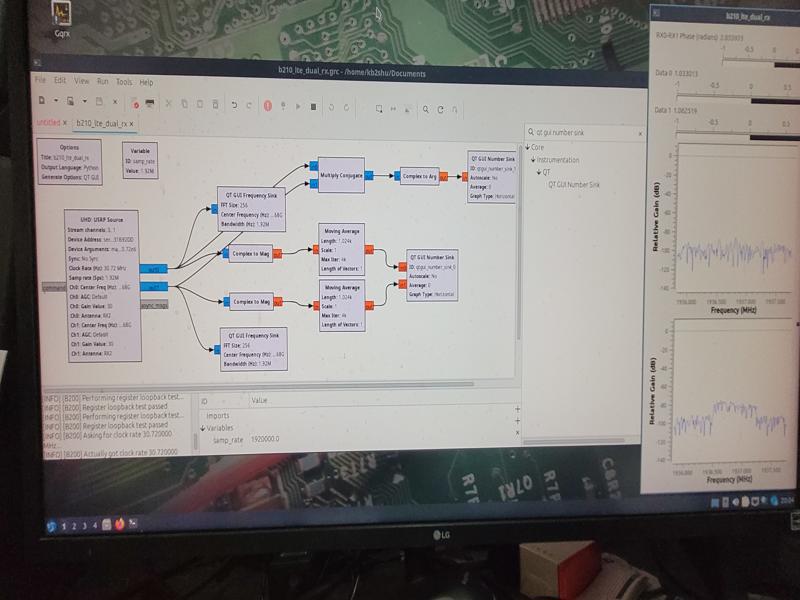
GNU Radio is a free software development toolkit that provides signal processing blocks to implement software-defined radios and signal processing systems. It can be used with external radio frequency (RF) hardware to create software-defined radios, or without hardware in a simulation-like environment. It is widely used in hobbyist, academic, and commercial environments to support both wireless communications research and real-world radio systems.
Overview

The GNU Radio software provides the framework and tools to build and run software radio or just general signal-processing applications. The GNU Radio applications themselves are generally known as “flowgraphs”, which are a series of signal processing blocks connected together, thus describing a data flow.
As with all software-defined radio systems, reconfigurability is a key feature. Instead of using different radios designed for specific but disparate purposes, a single, general-purpose, radio can be used as the radio front-end, and the signal-processing software (here, GNU Radio), handles the processing specific to the radio application.
These flowgraphs can be written in either C++ or Python. The GNU Radio infrastructure is written entirely in C++, and many of the user tools (such as GNU Radio Companion) are written in Python. Flowgraphs can also be constructed in the GNU Radio Companion GUI.
GNU Radio is a signal processing package and part of the GNU Project. It is distributed under the terms of the GNU General Public License (GPL), and most of the project code is copyrighted by the Free Software Foundation.[5]
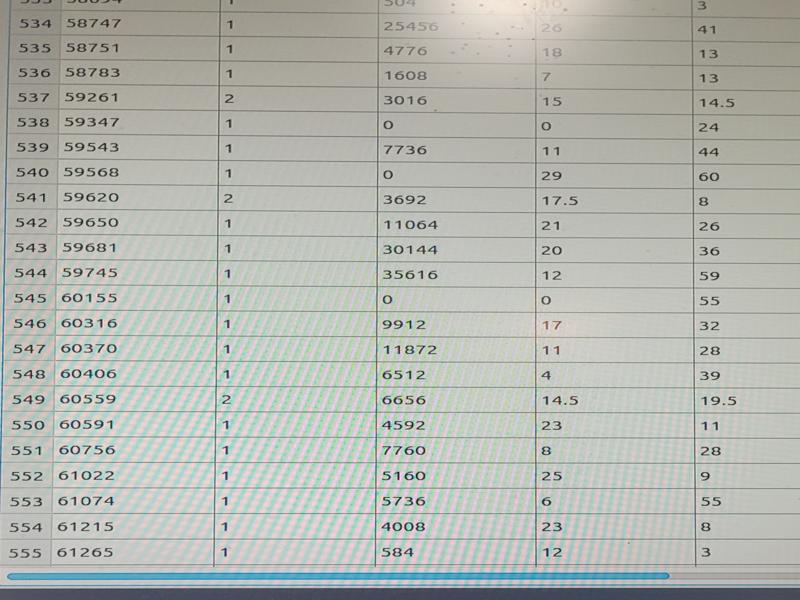
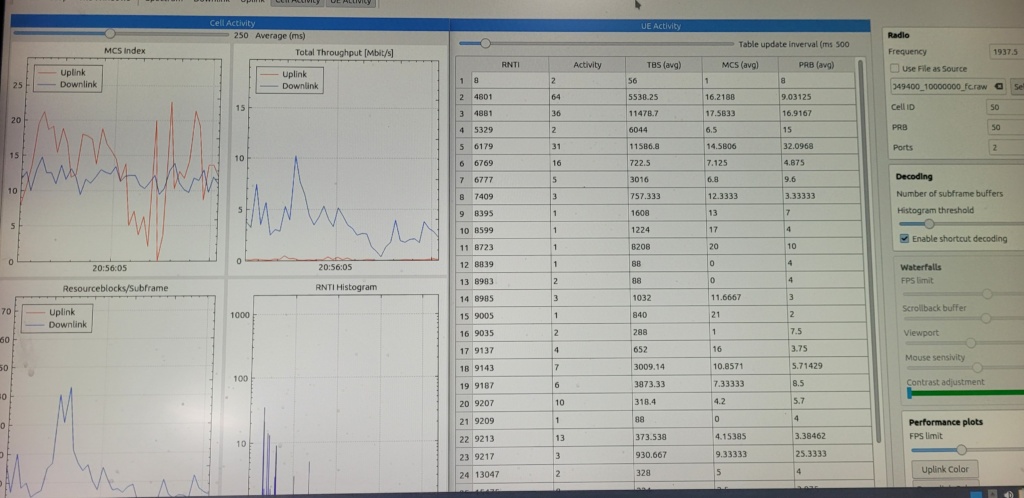
SUCCESS! MONITORING 555 LIVE CELL USER CONNECTIONS